The other two islands we visited on the three island tour were Mull and Staffa. We took a ferry from Oban to Mull, a quaint place inhabited by about 3000 people. The top soil is only about a foot deep covering volcanic rock so there is little agriculture but lots of grazing sheep and cows including the sweet looking Highland Cattle. There were sheep in the fields, on the roads…everywhere. And sheep with attitude. They weren’t moving for anyone!
Staffa
We were taken by boat out to a small, rocky island out in the middle of nowhere. Off in the distance we could see other small islands and the mainland with Ben Nevis and the mountain range over to the east.
As we pulled up in the boat the first thing we saw were the symmetrical, hexagonal basalt columns. Like many places in the north of Scotland with Norse names, the Vikings named it Staffa, meaning pillar island.
Very quickly we saw the large hole of Fingal’s Cave. We were able to walk along the cliffs to the entrance of the cave where the sea dramatically rushed in and out carving patterns in the rocks.
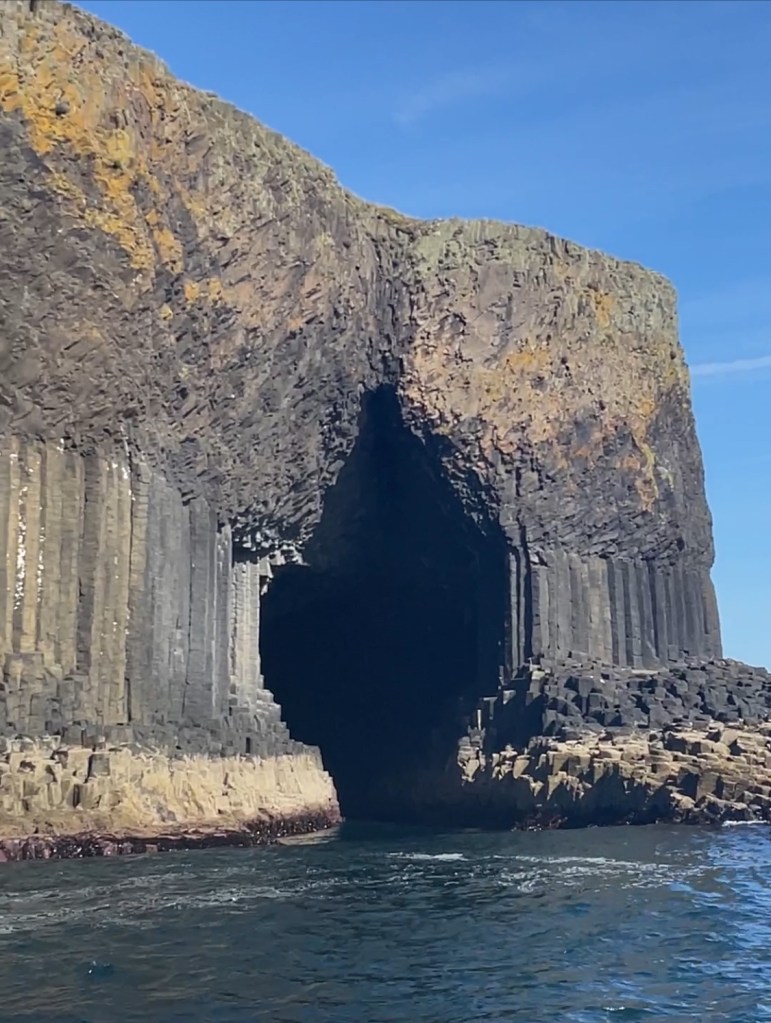
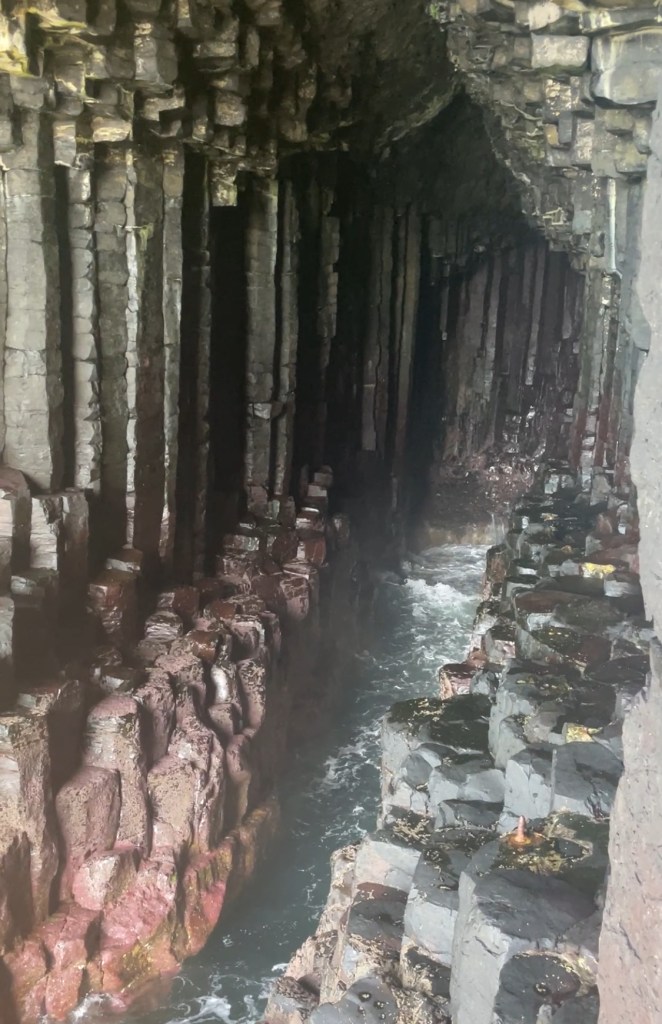
We were initially told the island, which is uninhabited, would be closed by the National Trust for Scotland which maintains it. We got lucky and they kept it open another week allowing us to trek around it’s summit.
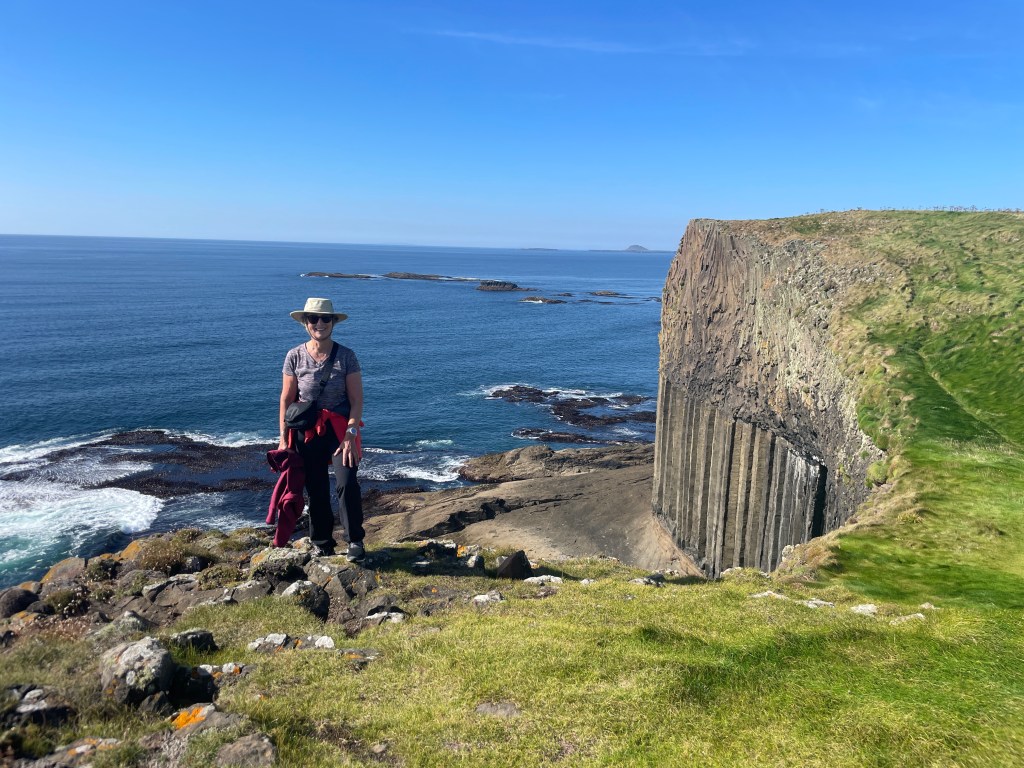
It is an awe inspiring place so it’s not surprising that one of the visitors, Felix Mendelssohn, composed the Hebrides Overture in it’s honour.
 Stepping off the Edge
Leave a comment