Our travels to the islands of Iona, Staffa, Mull and Skye took us to the west coast of Scotland. On our final day we drove to the east coast to visit St. Andrews.
All I really knew about St. Andrews was the famous golf course. St Andrews is known as the “home of golf” because of The Royal and Ancient Golf Club of St Andrews, founded in 1754, which until 2004 exercised legislative authority over the game worldwide (except in the United States and Mexico).
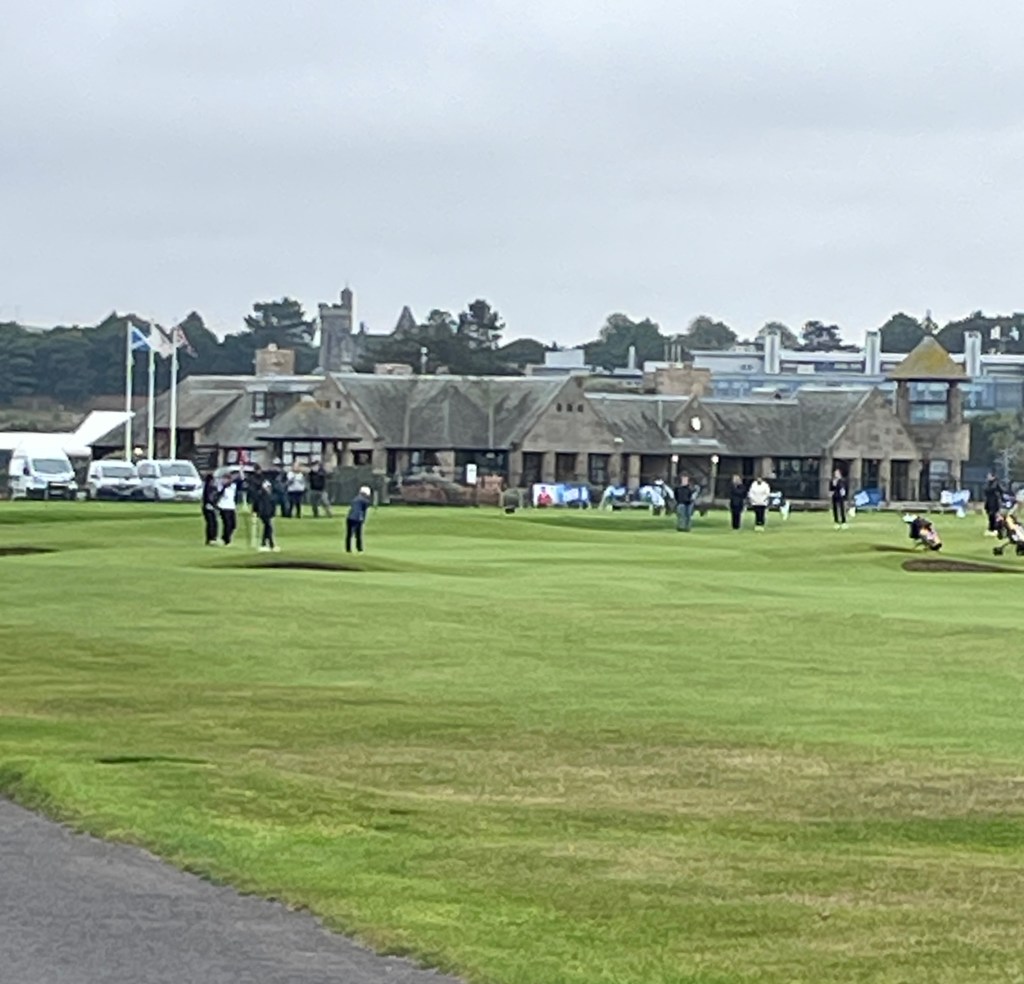
The Old Course of St Andrews Links (acquired by the town in 1894) pictured above is the most frequent venue for the oldest of golf’s four major championships.
But there is much more than golf in St. Andrews. The town is home to the University of St. Andrews, the third oldest university in the English Speaking world and the oldest in Scotland, ranked as the best university in the UK. Our host’s daughter is a graduate. We witnessed a graduation class near the wall of the castle.
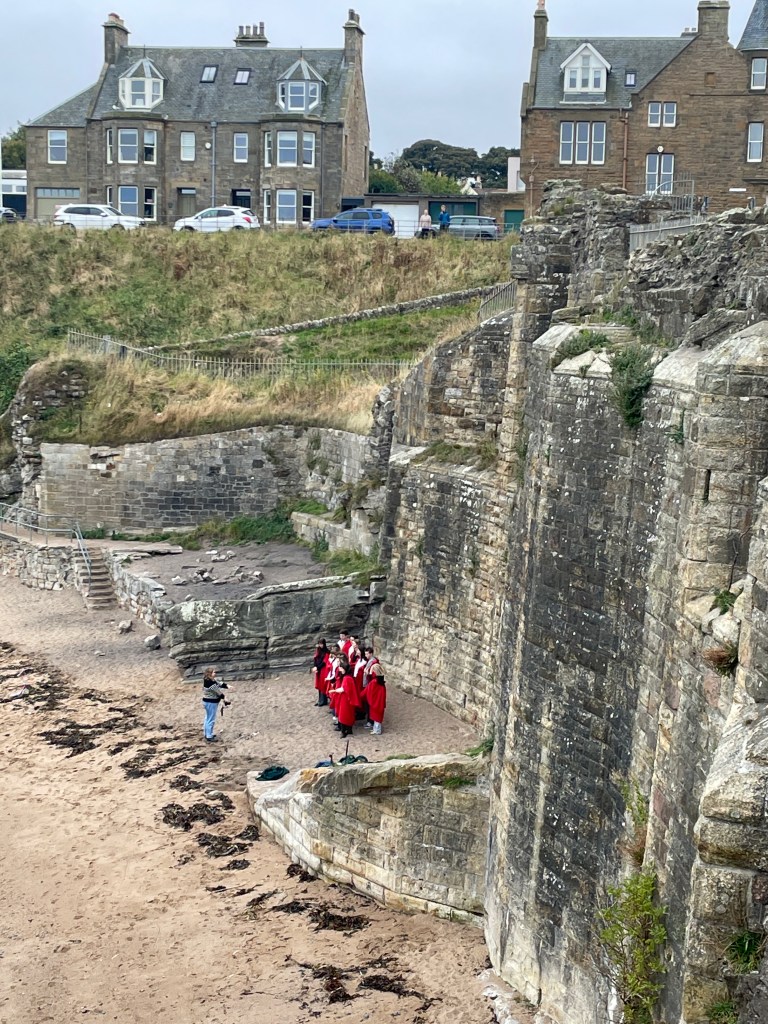
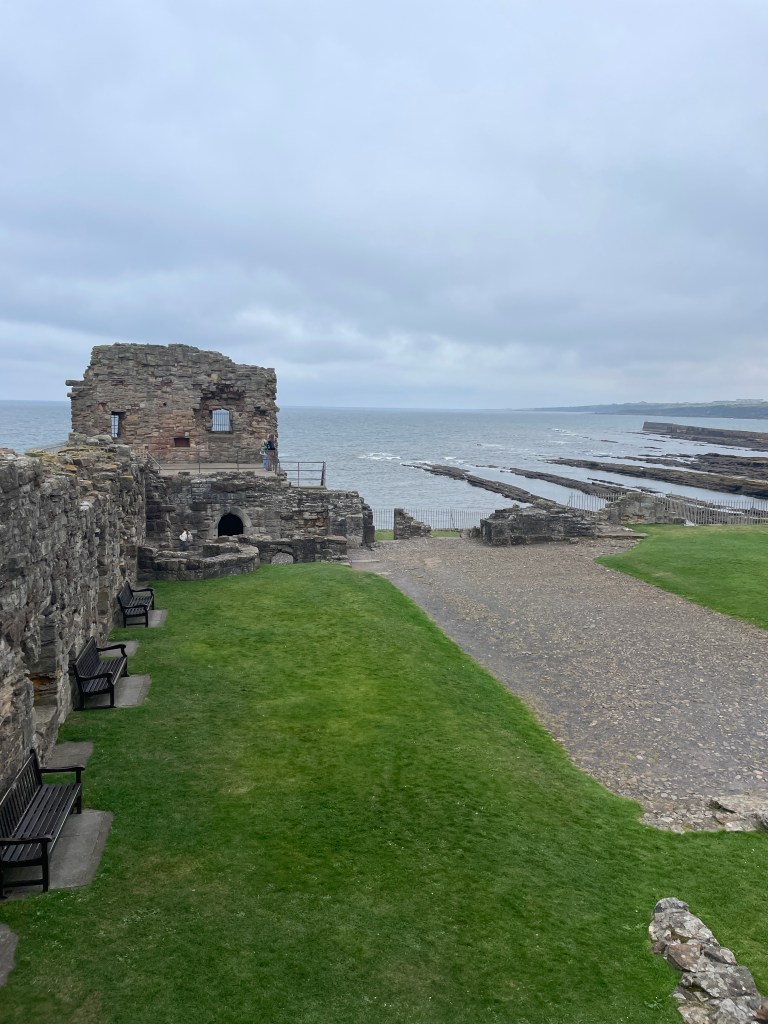
St. Andrews Castle was the 5th and final castle we toured. Originally built around 1200, like the others it’s history includes being ruined and rebuilt, home to royalty and a prison.
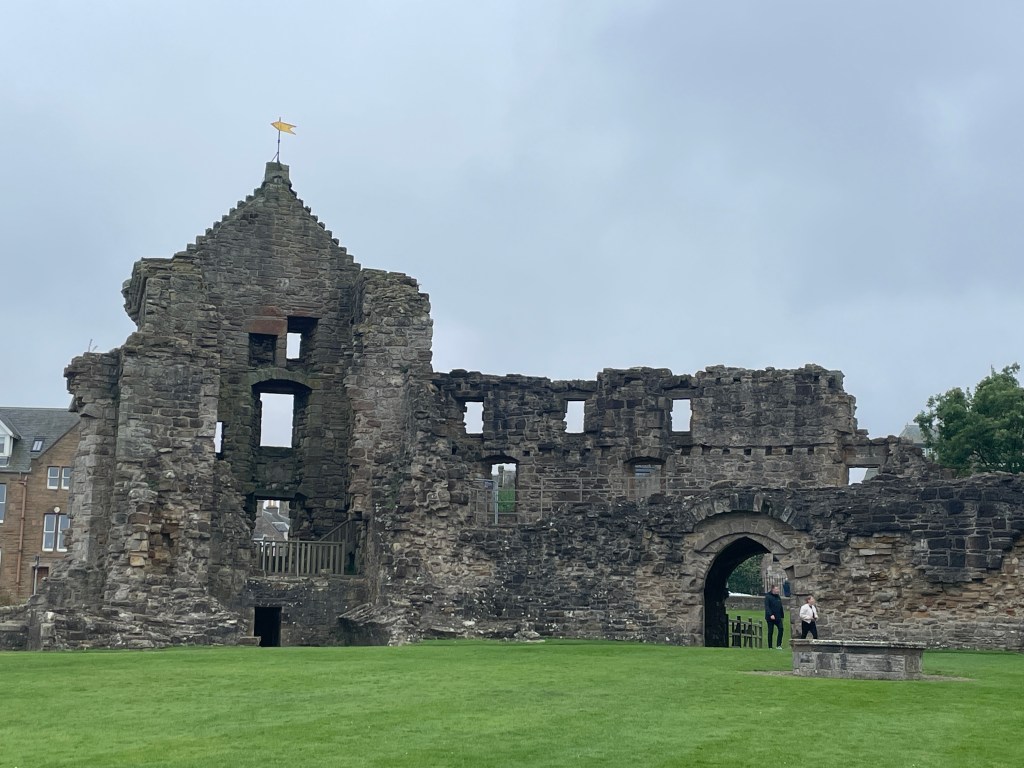
It was the heart of the protestant reformation in Scotland. The Cardinal lived there yet outside the walls, Scottish Protestants were increasingly viewed as dangerous turncoats who sided with the English. The protestants murdered the Cardinal in 1546 and took refuge in the castle and formed the first Protestant congregation in Scotland.
The Catholic cathedral, built in 1160, is imposing and for many years was the largest in Scotland. Catholic Pilgrims from all over Scotland, and even Europe, came in large numbers hoping to be blessed, and in many cases to be cured, at the shrine of Saint Andrew. It fell into ruin during the Scottish reformation in the 16th Century when Scottish mass was banned.
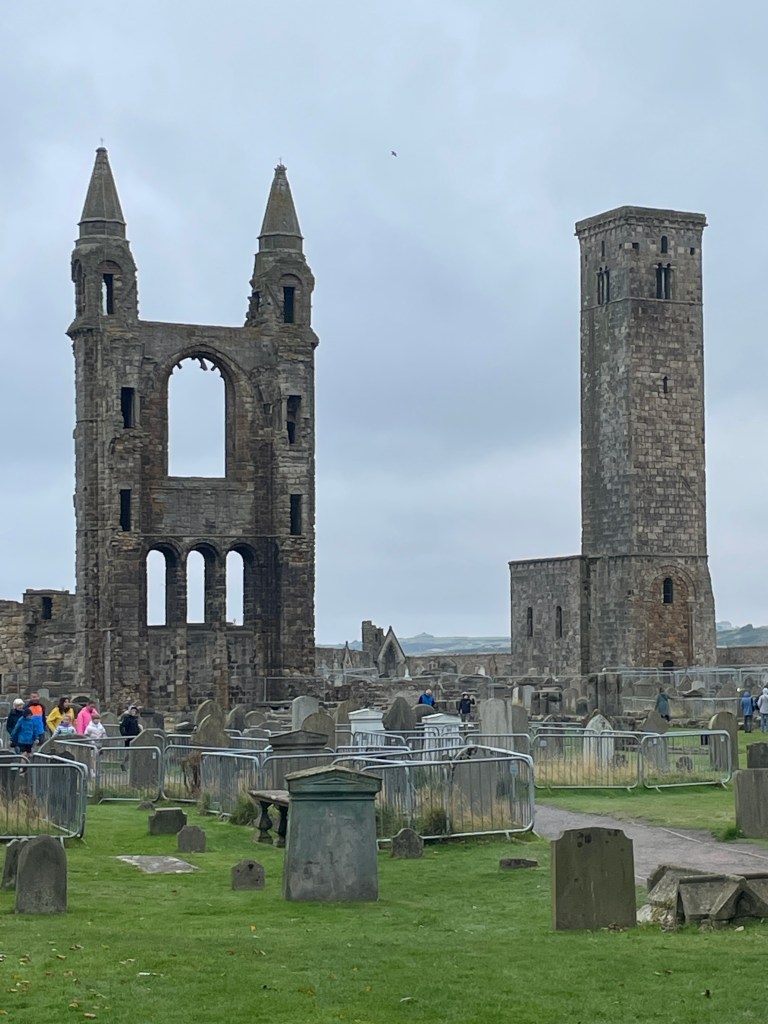
St. Andrews is a pretty seaside town with lovely streets and buildings where we enjoyed walking around and eating a lunch of fish and chips!
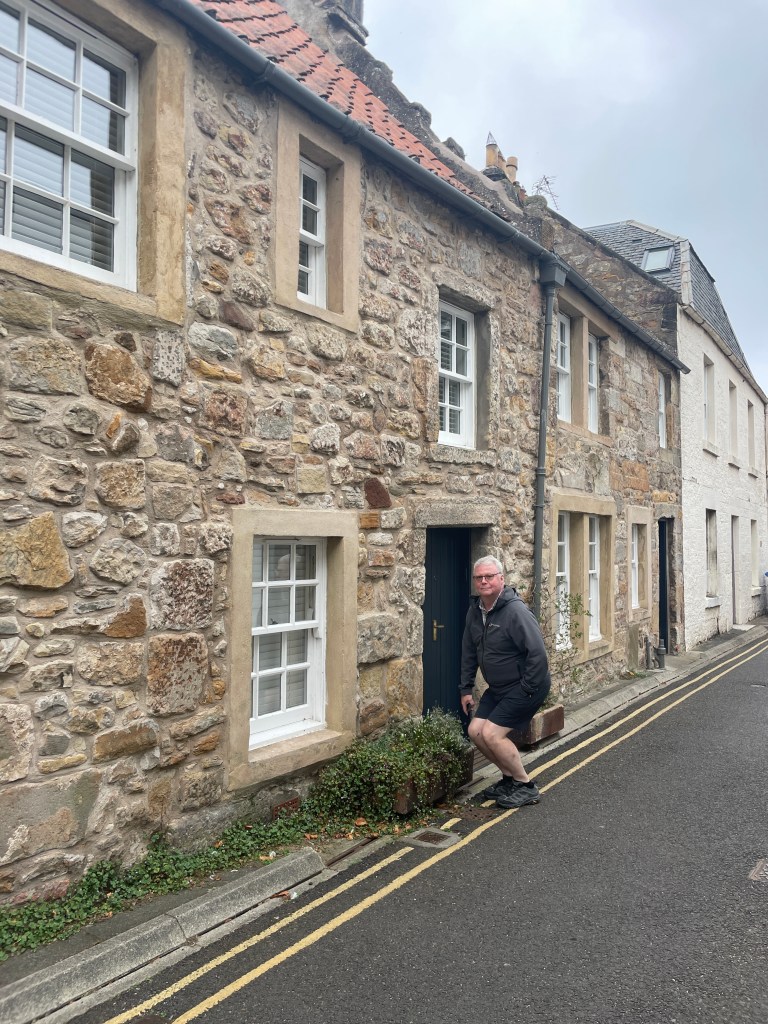
 Stepping off the Edge
Leave a comment