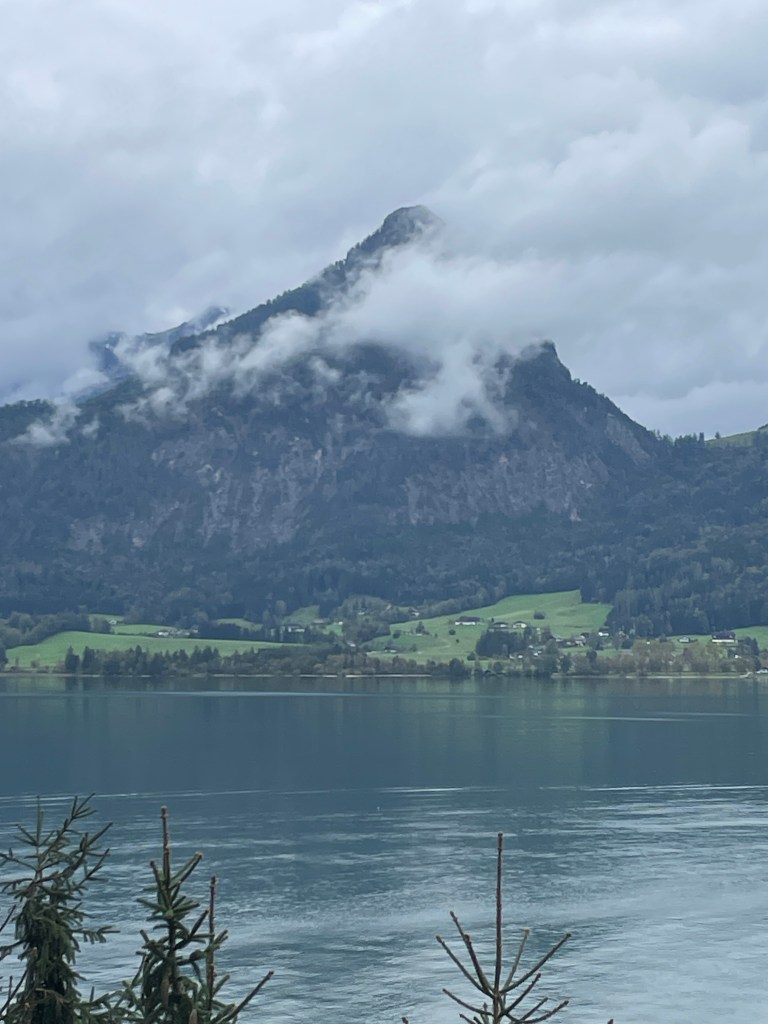
Lotte drove us on a lovely, albeit grey, day trip out to the mountains and ‘sees’ or lakes of the region known as the Salzkammergut. She told us the history of the different spots we visited.
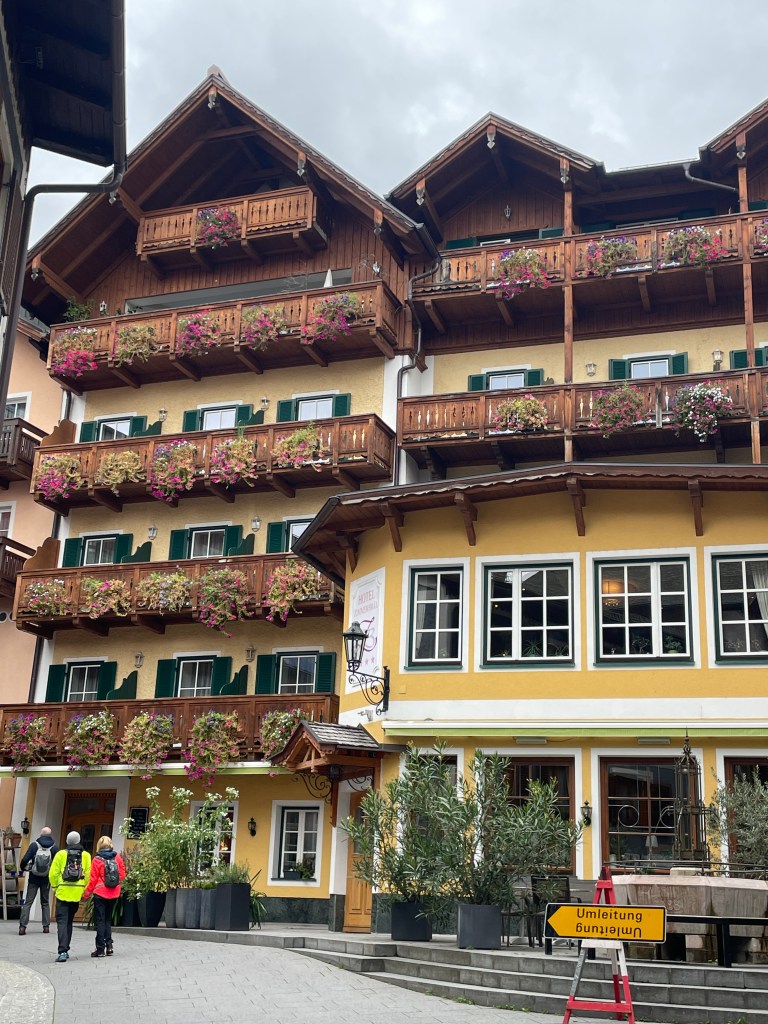
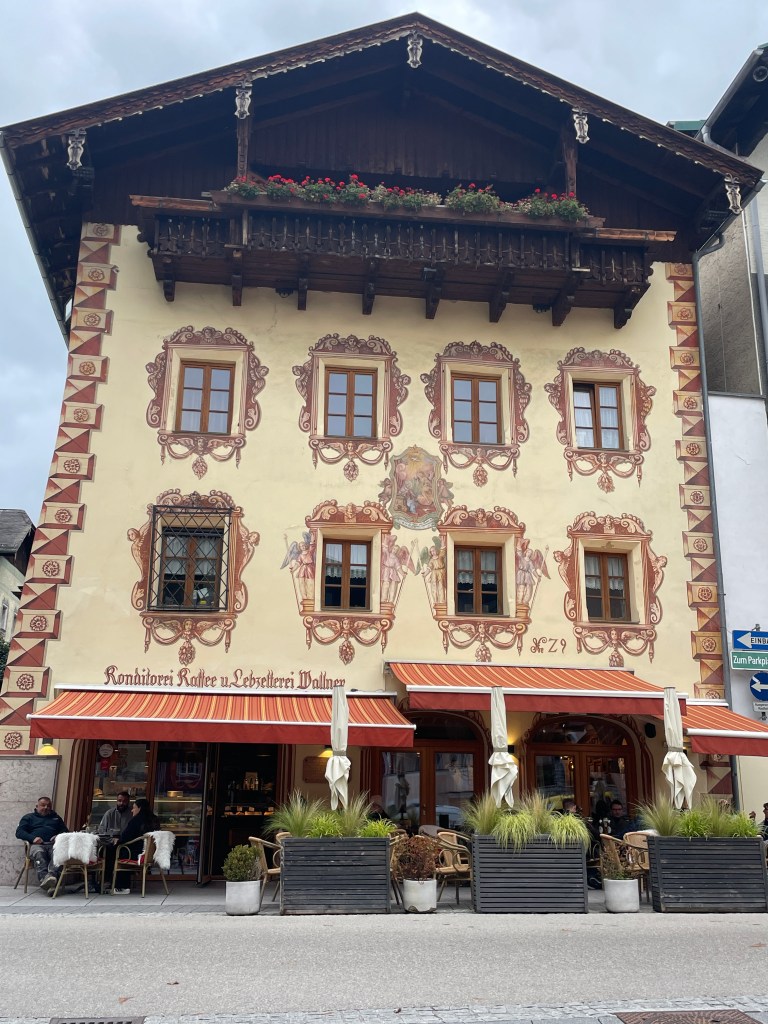
First of all we stopped at St. Wolfgang, a picturesque village on the lake with beautifully painted hotels and restaurants and shops selling local meats, cheese and souvenirs. We commented on the local charm complaining that in Canada, restaurant chains had moved into mountain towns.
Legend has it that Bishop Wolfgang of Regensburg was living as a hermit and decided to build the first church here. The location of the building was inspired by his famous “Axthrow”, a “divine dispensation”.
He threw the ax with the vow to build a church where he found it. After three days of looking for the ax, he built the church next to the lake in 976AD.

The church is plain on the outside but dramatically ornate on the inside. Lotte wanted us to see the gothic interior, created in 1479-1481, containing the carved, painted, and gilded altar piece which represents the Coronation of the Virgin. Michael Pacher’s masterpiece is one of the largest and most impressive carved and painted European shrines.
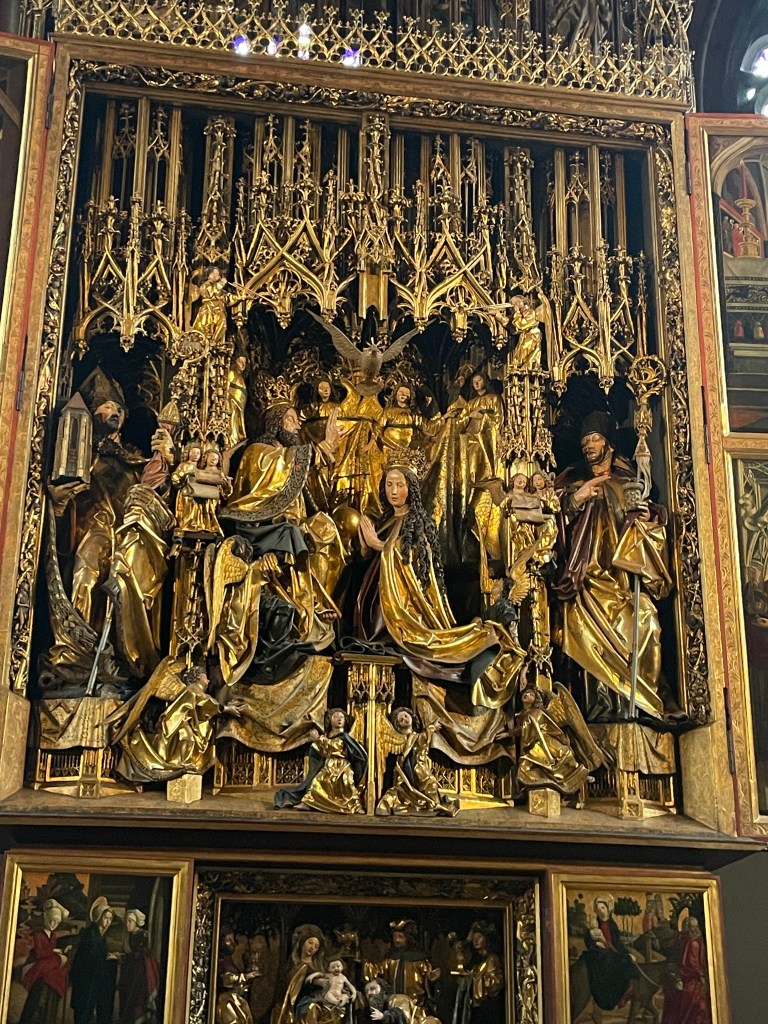
On either side there are two scenes, one of the Life of Christ and the other of Saint Wolfgang, which open like wings.

It wouldn’t be a visit to the Salzkammergut without a stop at Zauner in Bad Ischl for one of their famous tortes and pastries. Bad means spa and there are natural spas in many of these places.
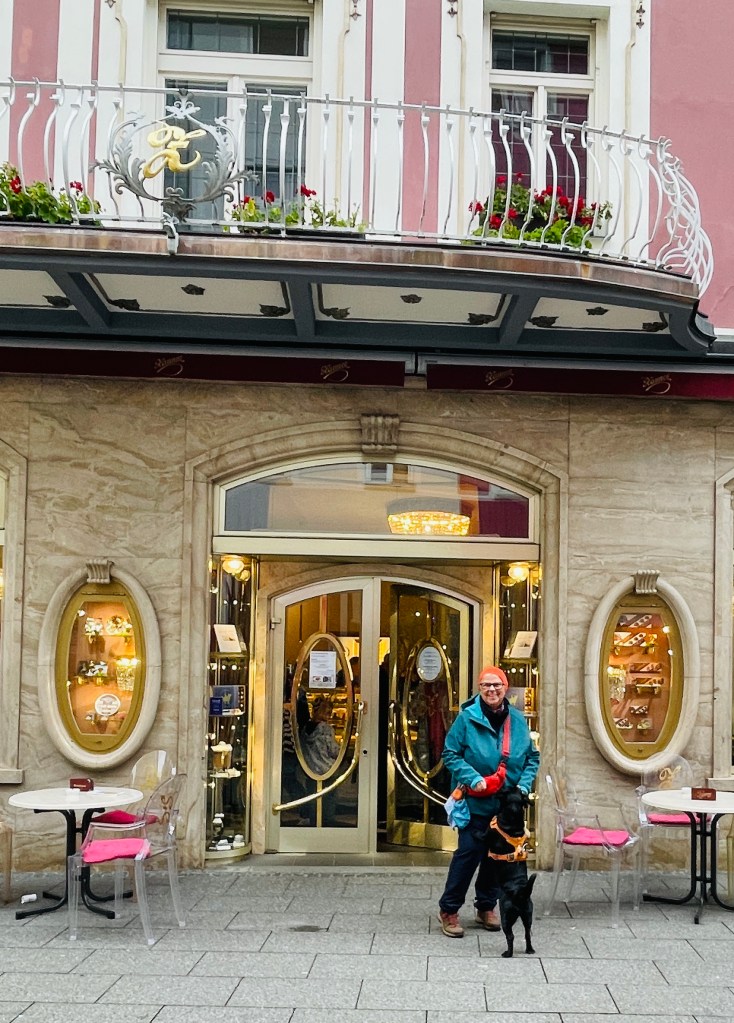
We loved the cute chocolate hedgehogs. Lotte has real hedgehogs in her yard which her dog Pablo chases.

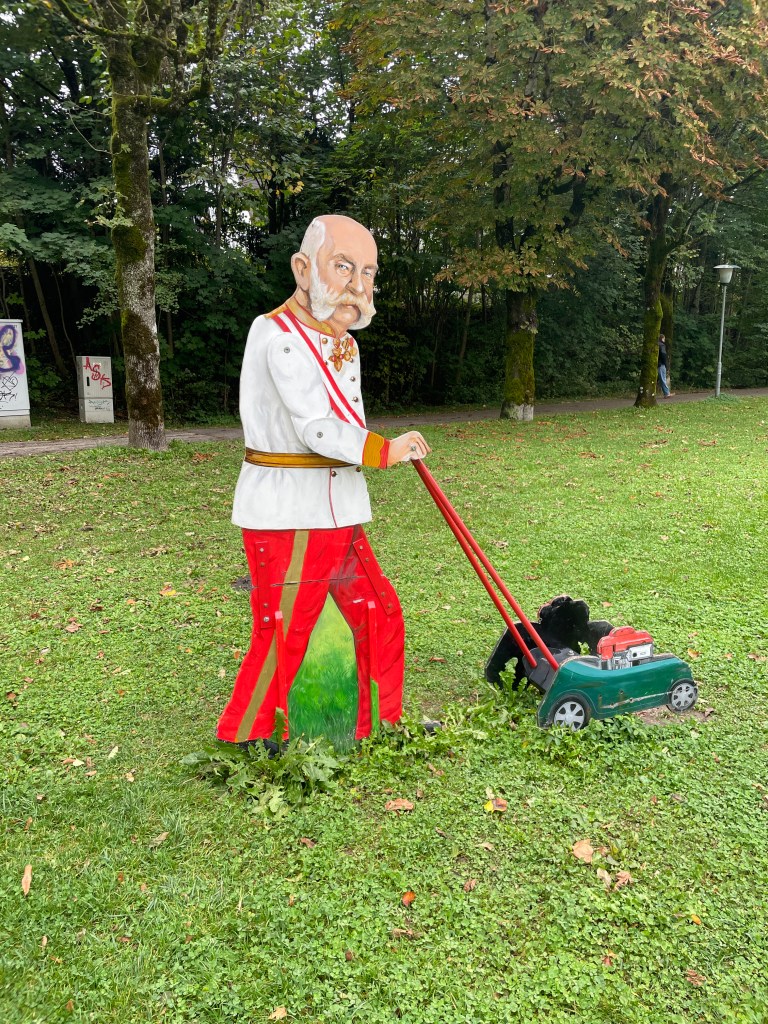
Bad Ischl was the summer residence of Francis Joseph, emperor of Austria and king of Hungary, from 1854 to 1914. It was frequented by his friends including the composers Johannes Brahms, Anton Bruckner, and Johann Strauss.
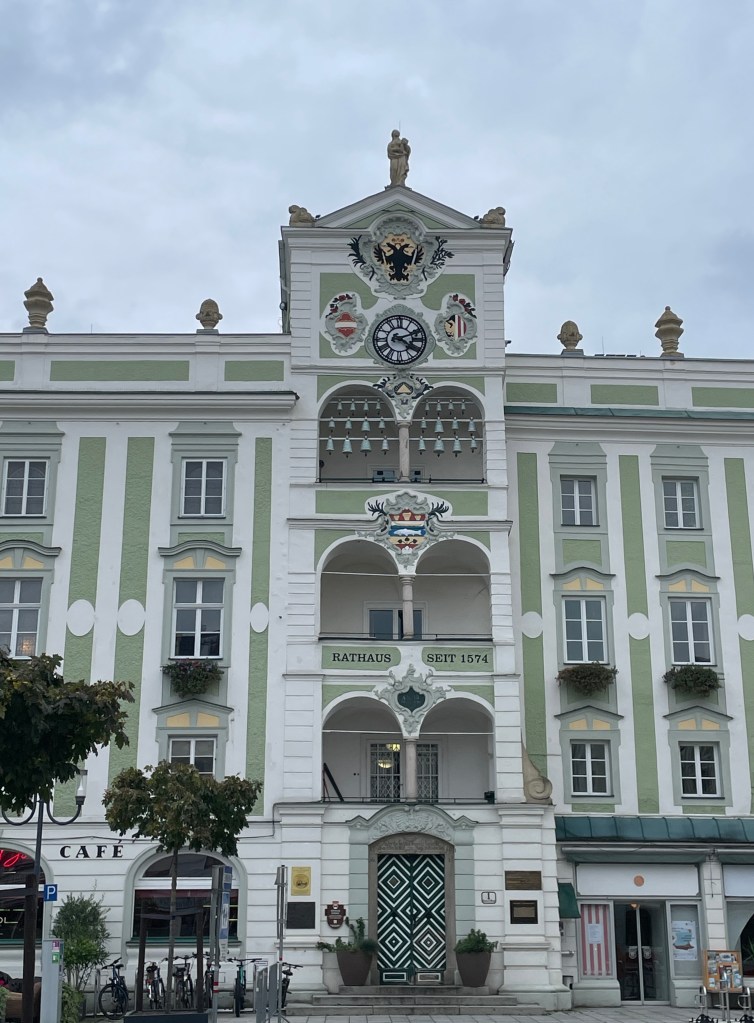
Our final stop was Gmunden, another pretty town on a lake. We stopped to hear the music, the ceramic bells of the glockenspiel on the city hall.
 Stepping off the Edge
Leave a comment