To get on India time we decided to keep busy so we’d sleep in the evening. We hired a driver who took us to visit three different historical sites in New Delhi. This also gave me a chance to see the city and experience the traffic.
I was pleasantly surprised. The main thoroughfares are lined with greenery and flowers. We drove past the President’s Palace, large homes, apartment blocks, hospitals, government buildings, monuments and lots of parks. Overall an attractive city.
Delhi is nice to look at but loud with lots of honking. Trucks even have “Please Honk” written on the back. Honking is a way to let other drivers know you are there. I saw a mix of bicycle rickshaws, tuk tuks (“auto rickshaws” to the locals), taxis, buses, electric public buses, all honking and weaving, not staying in their lane and people darting between them to cross busy streets!
Our first stop, The Red Fort Complex. Built in 1639, the Mughal Emporer Shah Jahan (a Sunni Muslim) resided here when he moved the capital from Agra The British occupied it in the 1920’s then later it was the site of the celebration of Indian Independence.
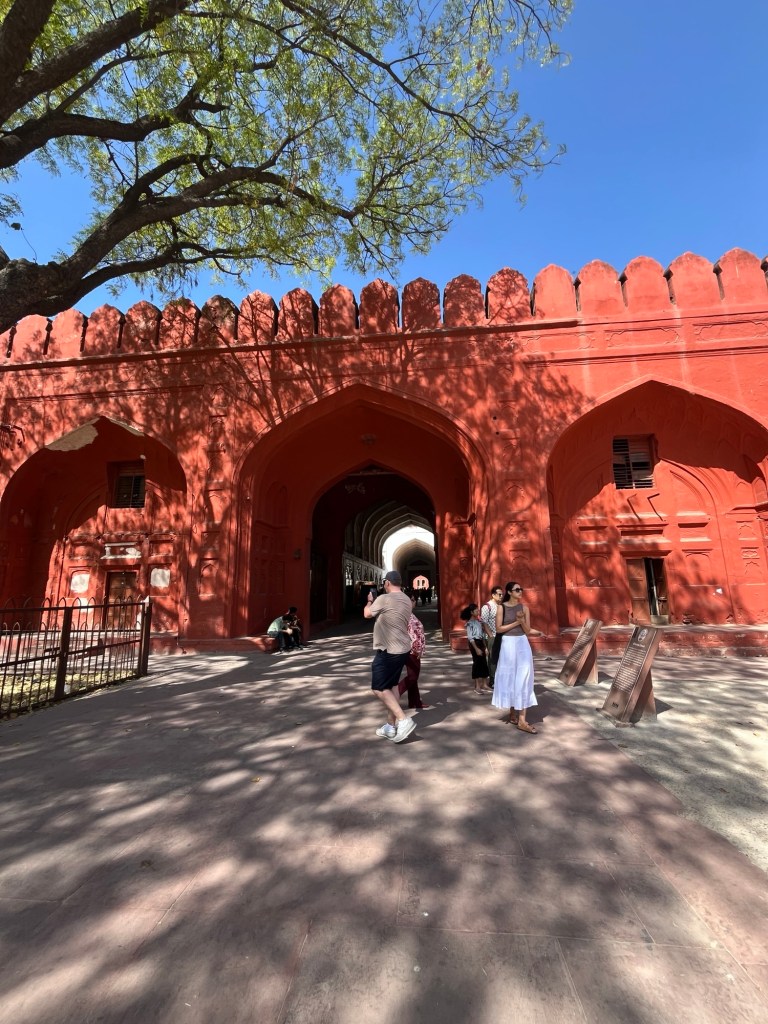
Some structures are made of red sandstone, common around Delhi in both old and modern buildings. It covers 255 acres and the turreted walls surround beautiful gardens, a Bazaar, museum, shops and cafes.
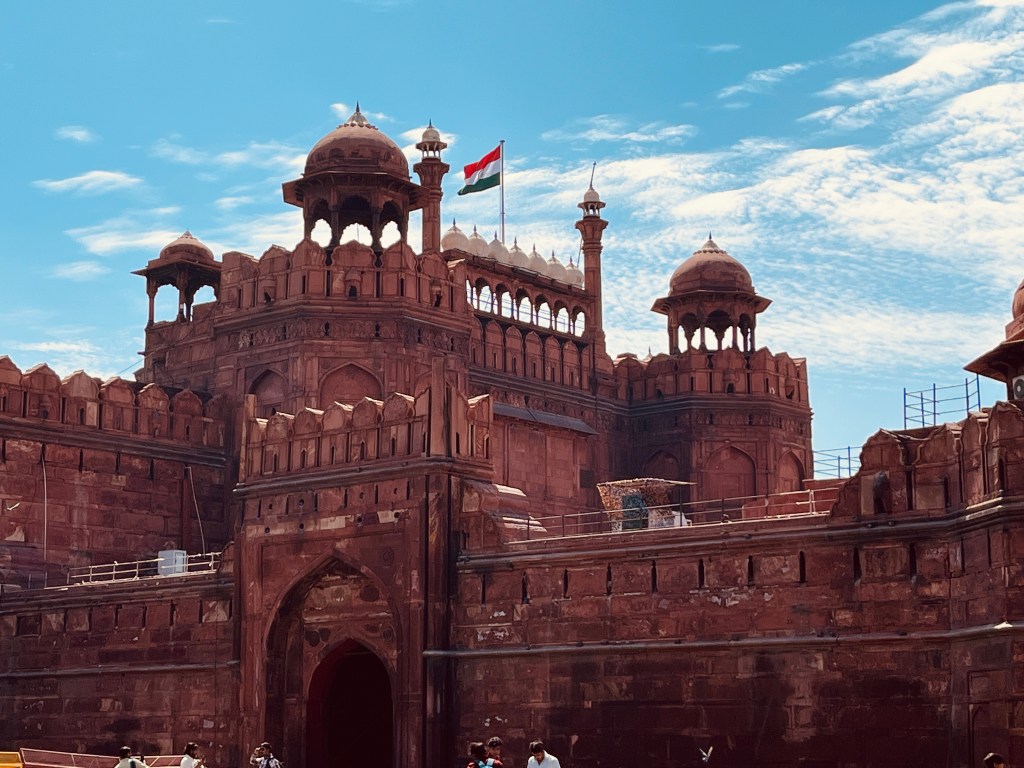
The Red Fort was designated a UNESCO World Heritage Site (as were the other two sites below).
At the far end of the complex are former apartments and baths where the Emperor and his family and concubines lived and temples where they worshipped, all connected by now empty canals and fountains.
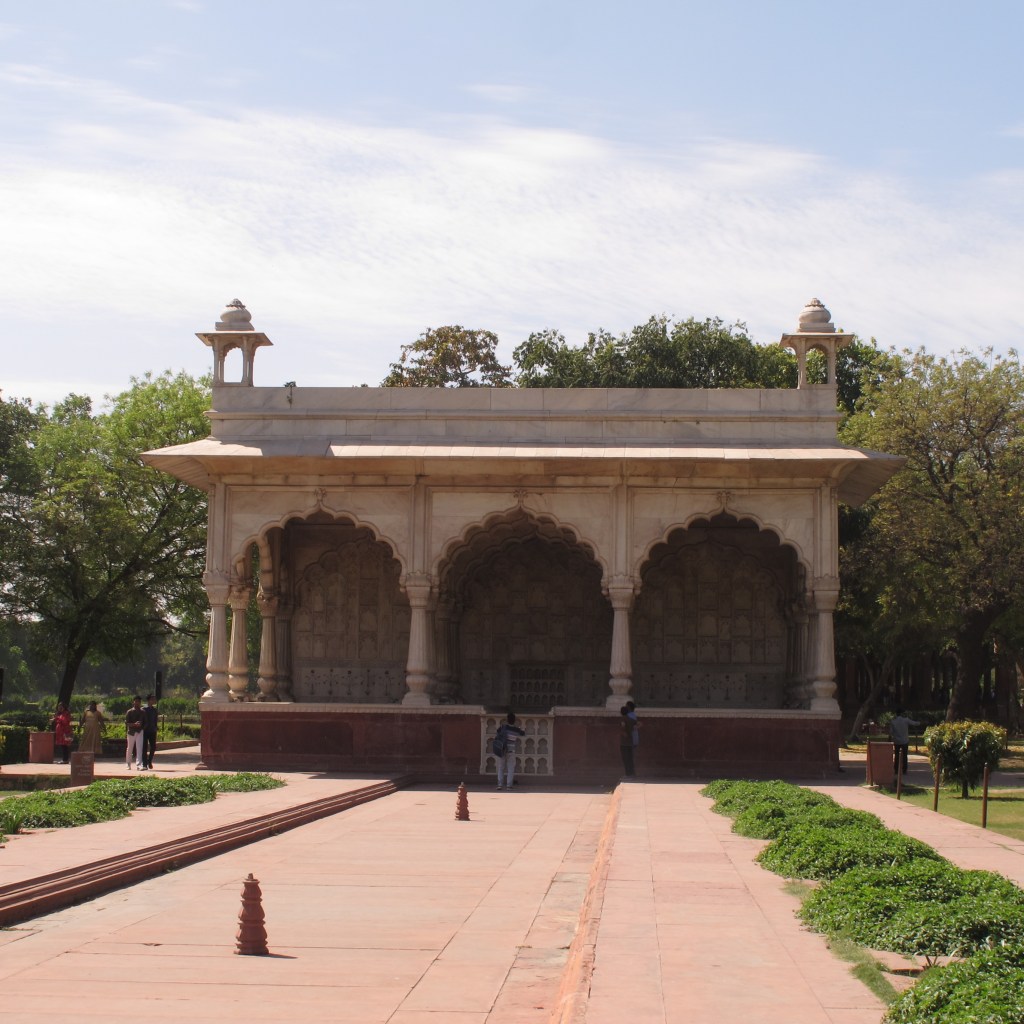
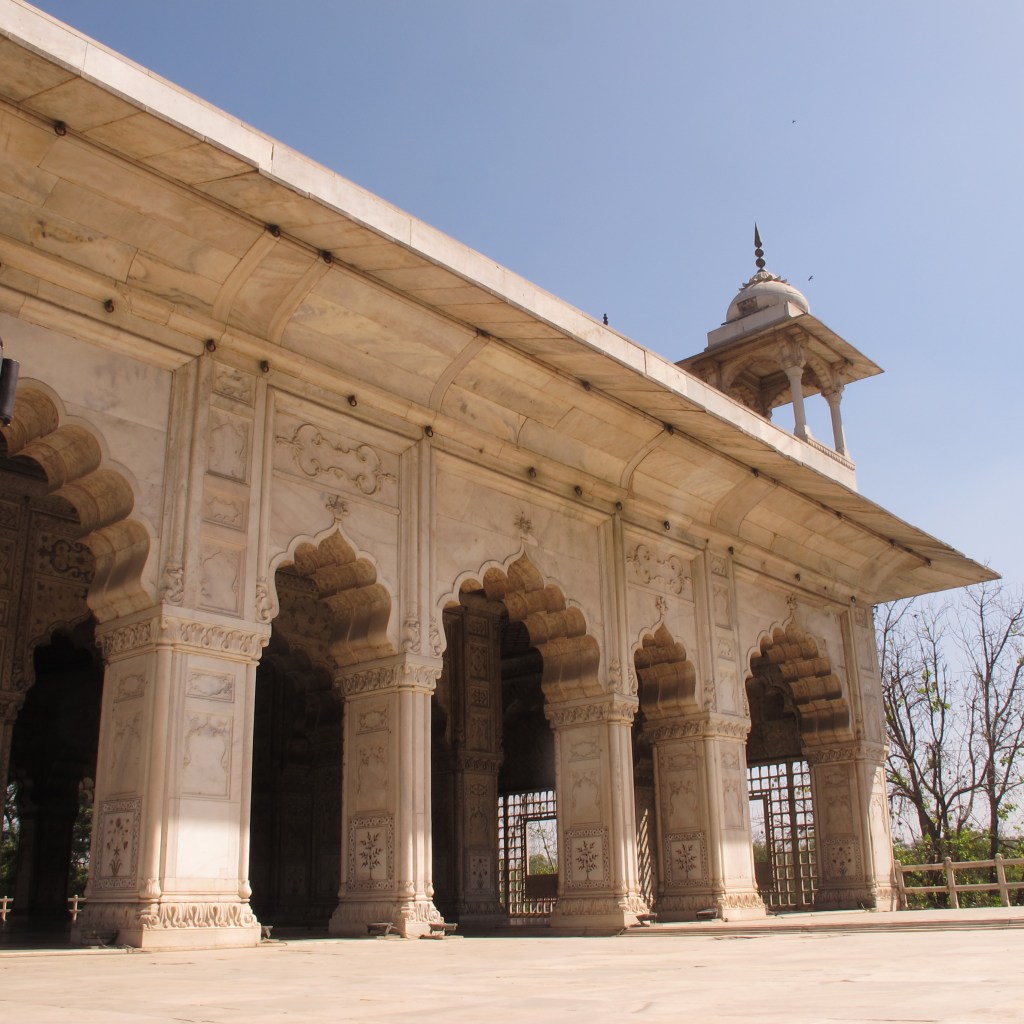
These buildings are white marble with inlaid art. You can see the Persian and Islamic influence in the ceilings and ornamentation.
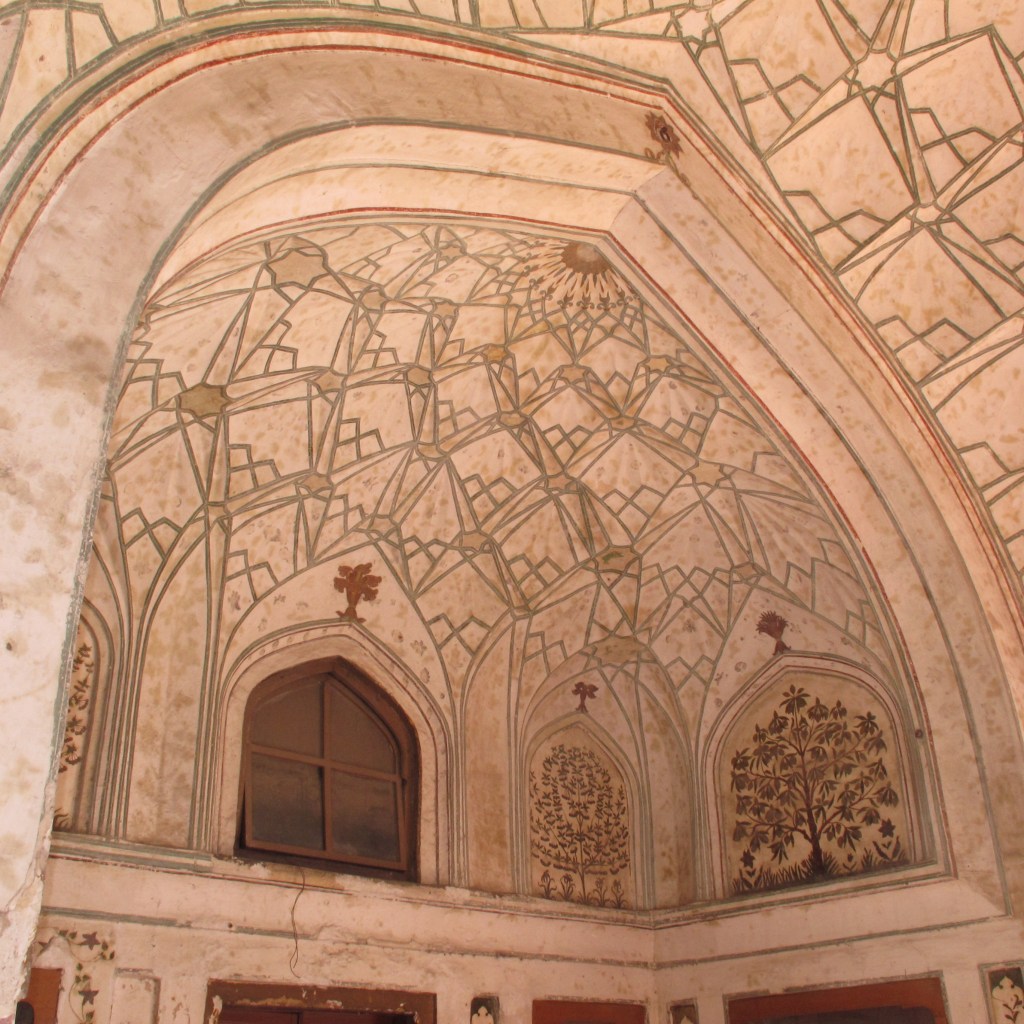
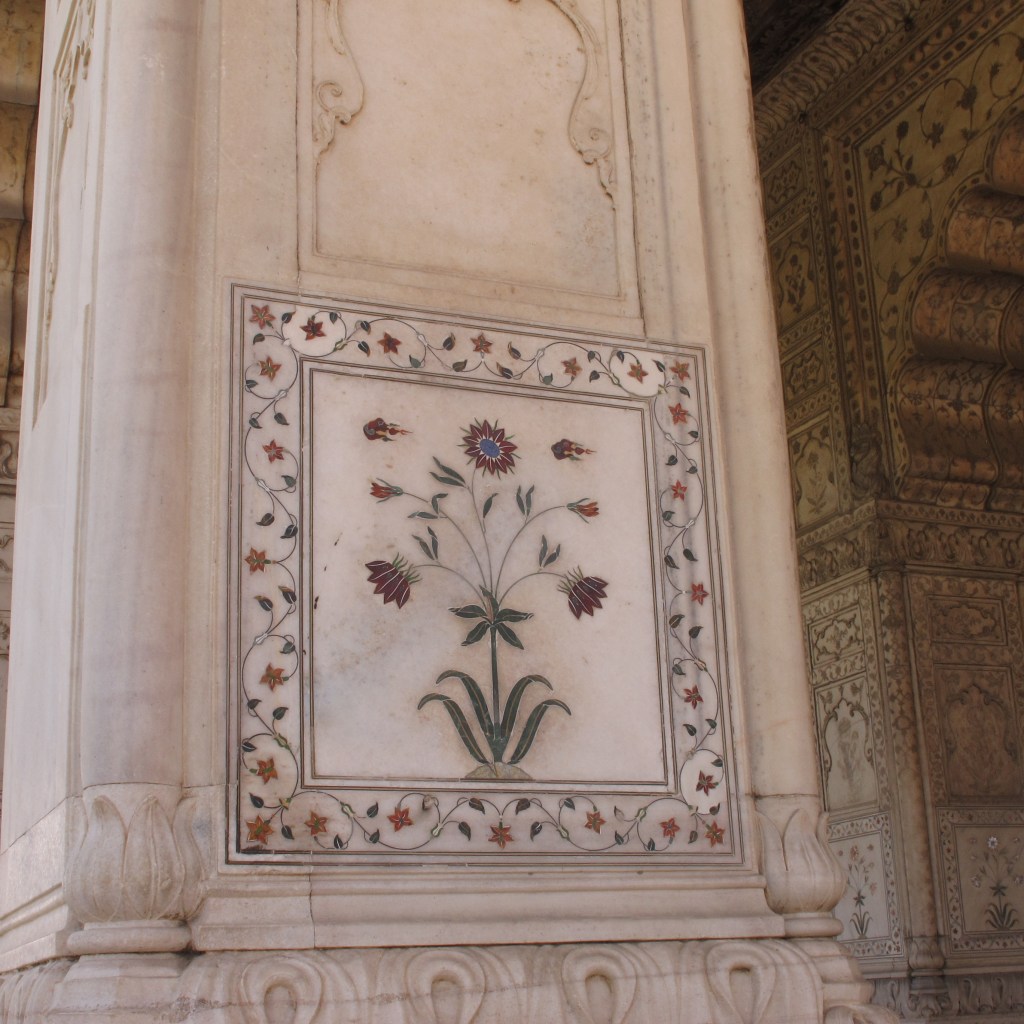
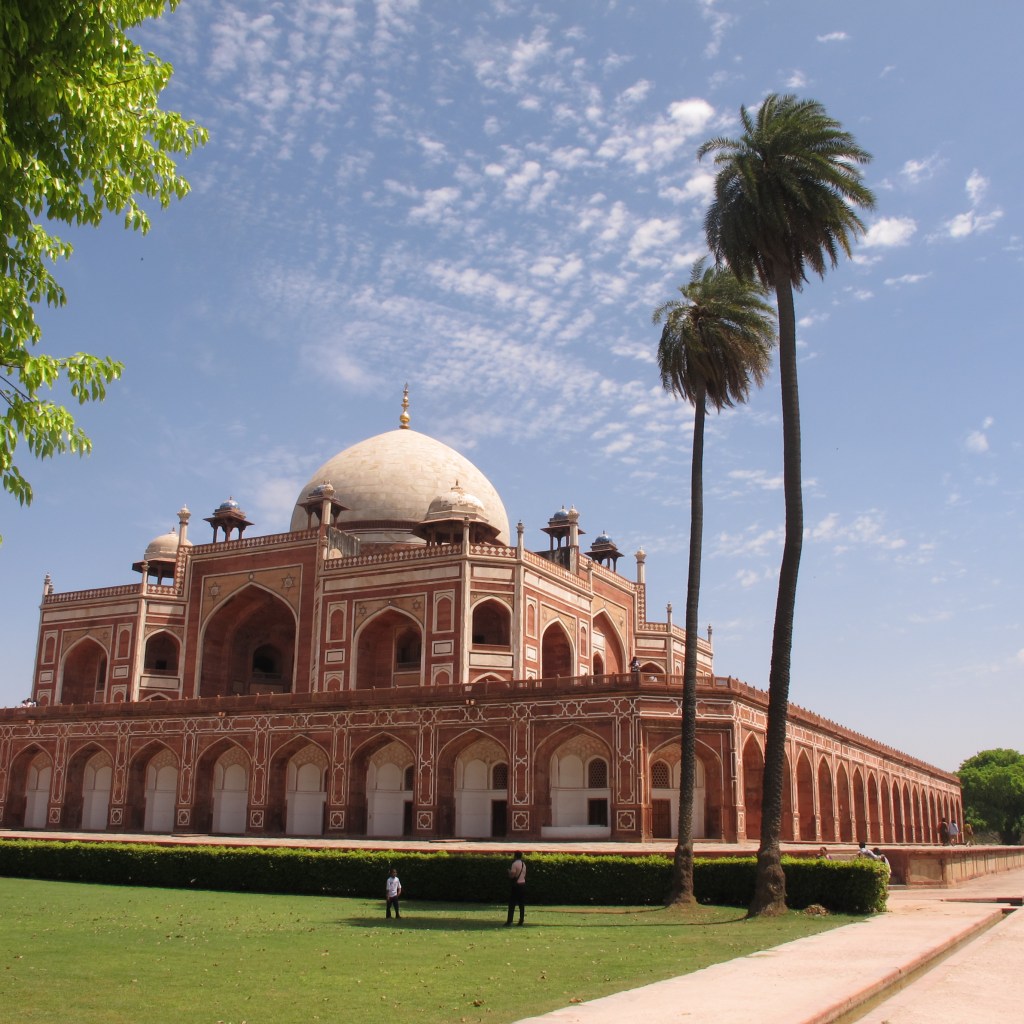
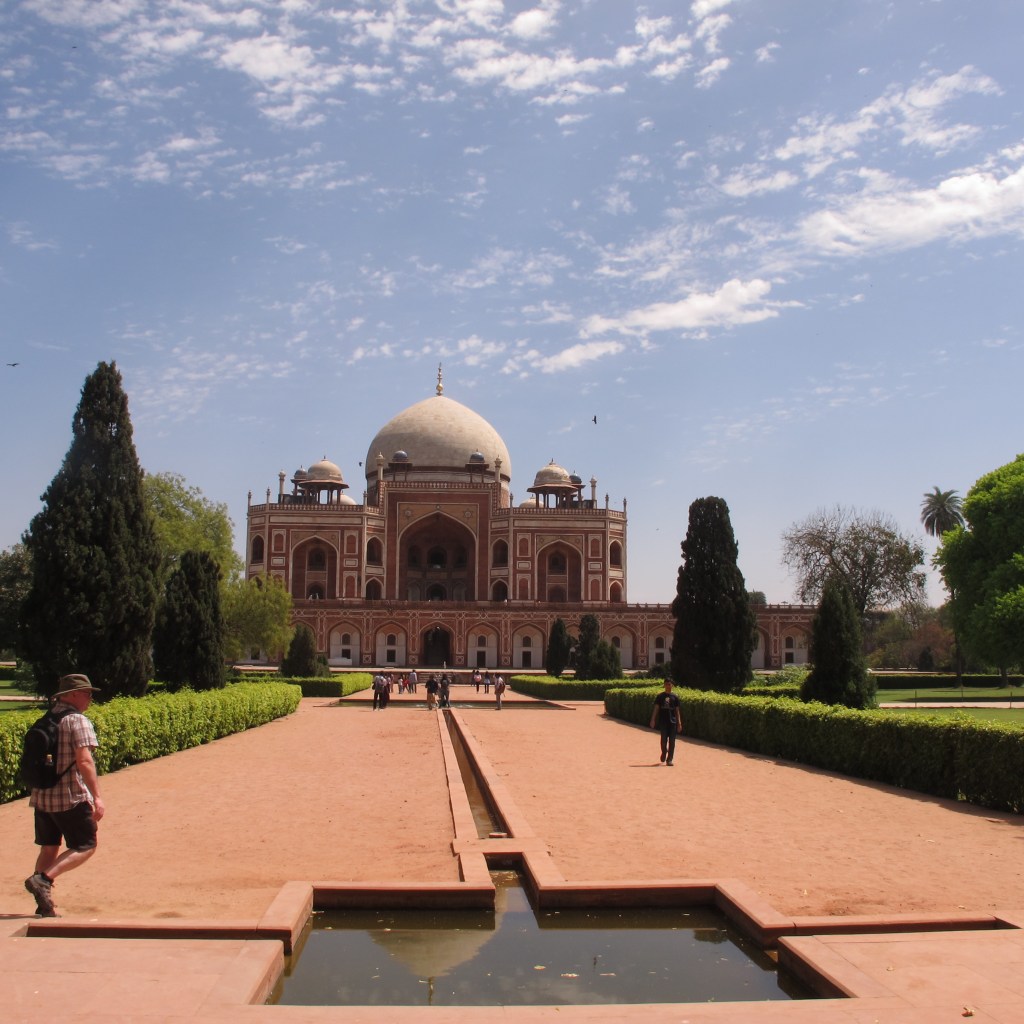
The next stop was Humayun’s Tomb, constructed even earlier, from 1565-72. Like so many sites we’ve visited around the globe it was left to the elements for centuries. The Aga Khan Foundation funded restoration on parts of the site, beginning in 2011.
The tomb resembles the Taj Mahal. See the description below.
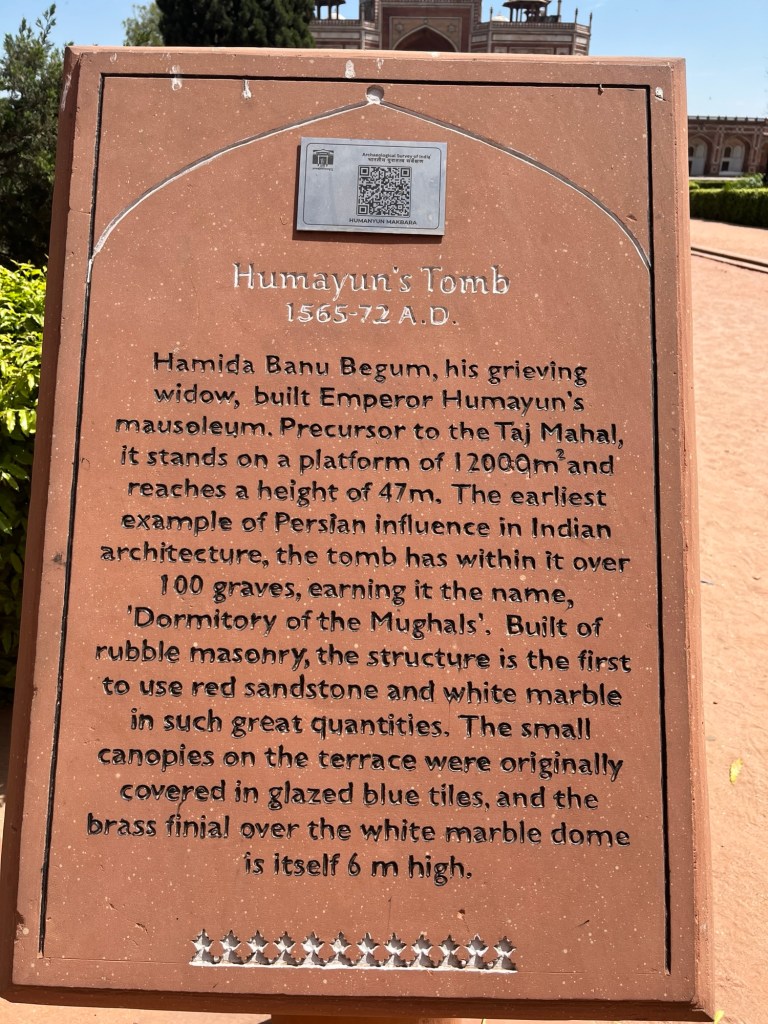
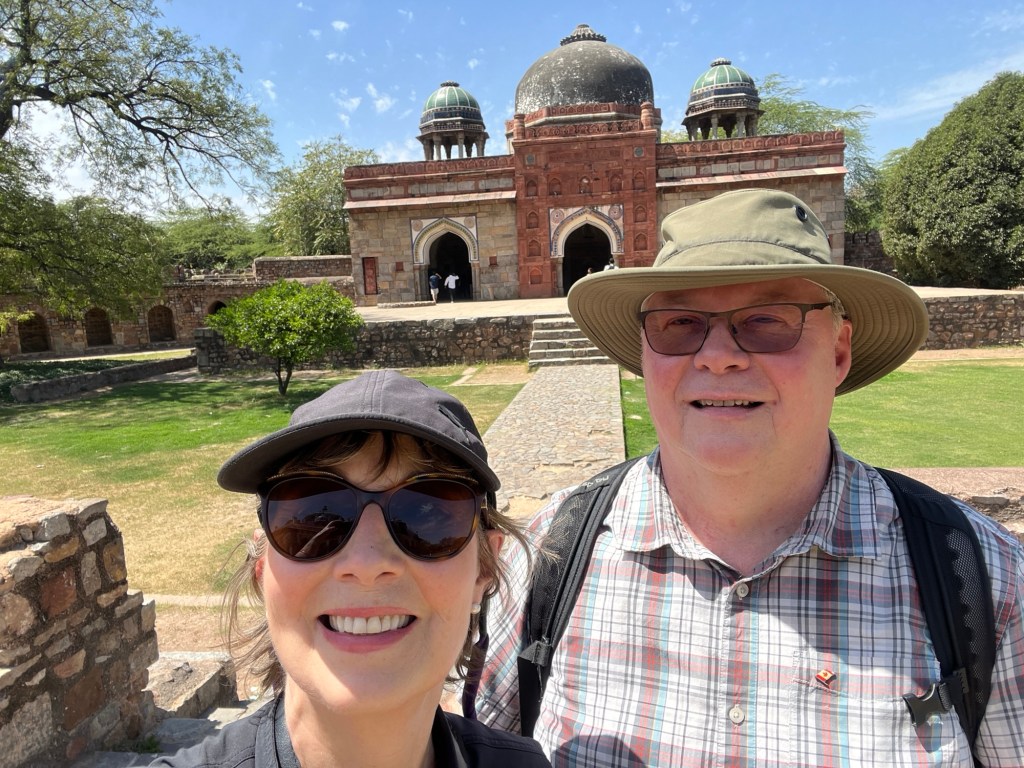
Another one of the many mausoleums and temples on the site which also includes beautiful gardens, canals and fountains with water. Over 325,000 cubic feet of dirt was removed from Isa Khan’s tomb to uncover the gardens and structures.
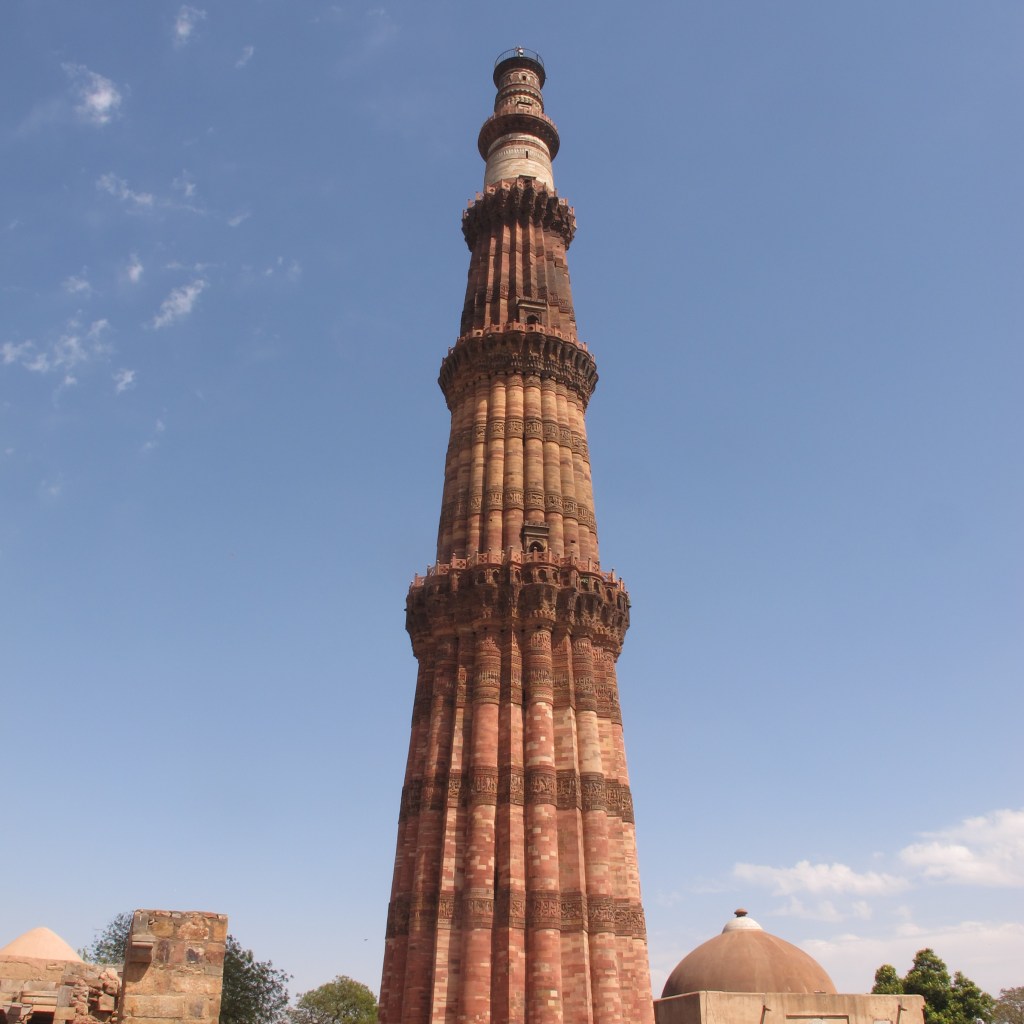
Our last stop on a sunny but hot day was Qutub Complex within which is the stunning 238 foot tall Qutub Minar, a minaret. it has 399 steps to the top however people are no longer allowed to climb them.
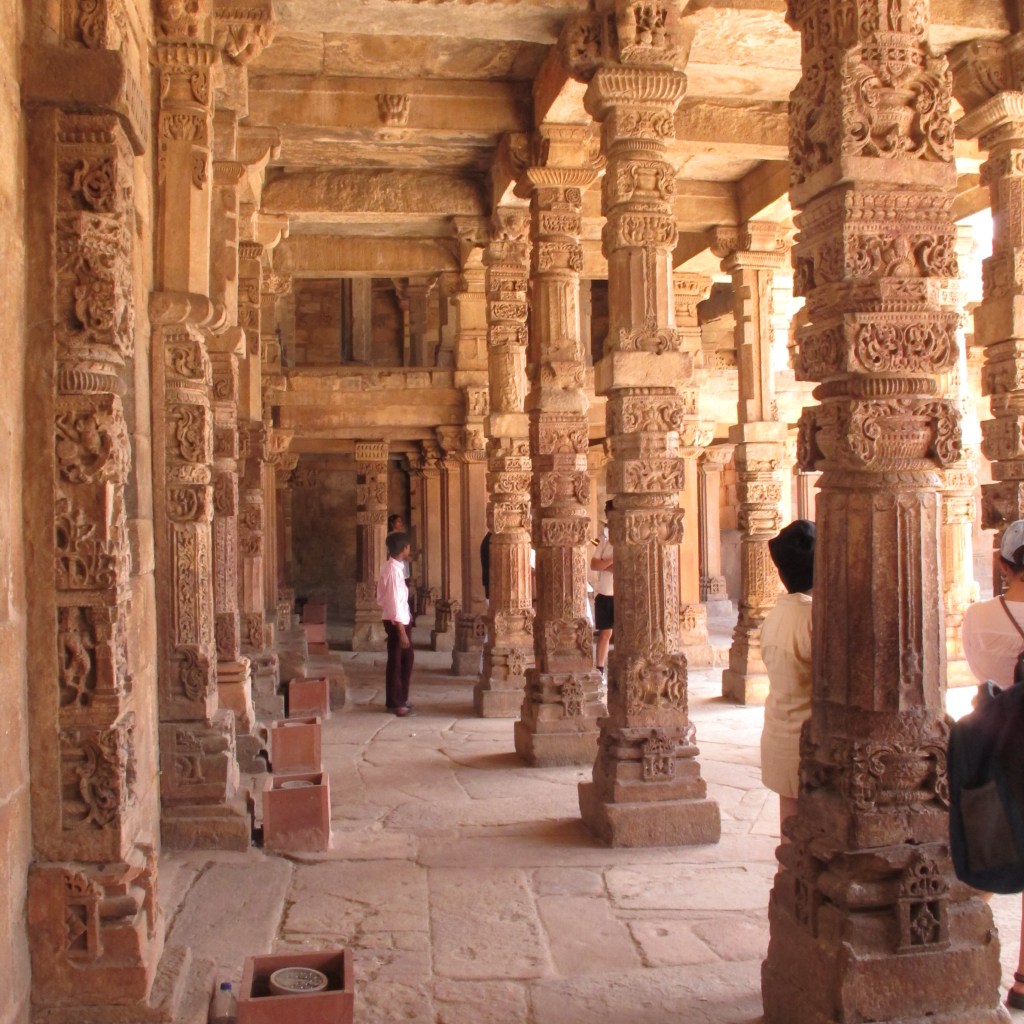
The complex is within Lalkot which was the first city in Delhi, in 1172-92 AD. The minaret took an additional 30 years to complete. Other cities rose to prominence in Delhi at this time but only Lalkot remained during the 664 years of Muslim rule in India.
In Lalkot, Razuya, the first lady Sultan of India, challenged the customs by taking off her veil and wearing male dress. Therefor, Lalkot stands for the emancipation and empowerment of women.
 Stepping off the Edge
Leave a comment